Sie befinden sich hier: Start Publikationen Teilen Facebook LinkedIn E-Mail Acting European N°8 The covid-19 crisis as a make or break moment for EU solidarity Juni 2020 The foreseeable economic recession calls for a collective European response in a spirit of solidarity into which France and Germany have injected fresh impetus. However, beyond financial commitments and corresponding mechanisms, European solidarity must be backed by a strong and tangible political commitment in order to shape public opinion as well as a geopolitical strategy. Acting European N°7 Sovereignty in the EU crisis mode – comeback or illusion? Juni 2020 The notion of national sovereignty has regained importance in recent years, both on the international stage and within the EU. The current coronavirus crisis appears, at least at first sight, to be another example of the comeback of strong nation states. However, on closer inspection, a more nuanced picture emerges: as nation-state action is becoming increasingly ineffective in the medium and long term, the need for European (shared) sovereignty is being reinforced. Acting European N°6 Europe’s fragile freedoms facing a coronavirus stress test Juni 2020 The coronavirus crisis is accelerating a paradigm shift in European integration. Freedom as the organising principle of the EU was in retreat even before the pandemic when liberalisation, openness and liberal democracy came under strain in many countries. Restrictions imposed to tackle Covid-19 are reinforcing this trend. Concerns that some of these restrictions may remain in place beyond the pandemic are legitimate, particularly in the case of countries that are abusing the crisis to achieve autocratic overreach. The EU will need to find new ways to defend its legal order based on freedom. Acting European N°5 In search of a common spirit: the countries of the Weimar Triangle in the Covid-19 crisis Juni 2020 The coronavirus crisis has affected the countries of the Weimar Triangle to varying degrees. Bilateral relations between Germany and Poland as well as Germany and France have been strongly influenced by border closures, which have led to tensions between the countries. Although Franco-German relations seem to be gaining momentum after years of relative gridlock, the lack of Franco-Polish cooperation as well as common initiatives led to the complete invisibility of the Weimar Triangle. At this point, new ways of thinking are urgently needed if the Triangle is to fulfil its raison d’être. Acting European N°4 Beyond European crisis management – Germany needs a post-coronavirus vision Mai 2020 Germany is emerging from the first phase of the pandemic with some scars, but broadly in good shape. Like most European countries, it was late in addressing the threat posed by the virus and in “thinking European” in its response. Its six-month EU presidency starting in July is bound up with unique challenges as re-opening internal borders and restarting the European economy may well determine whether the Union can hold together. In order to drive the EU’s economic and social recovery forwards, Berlin needs to present a compelling vision for a green and digital post-pandemic Europe worth striving for. Acting European N°3 France and Covid-19 – Between internal challenges and European opportunity Mai 2020 France is one of the countries that has been worst affected by Covid-19 in the European Union, pushing its healthcare system and its economic resilience to the brink. The current crisis rapidly put the government under severe pressure and once again tested French citizens' confidence in the executive. The French approach to this multidimensional crisis, which has had a strong European focus so far, could also be an opportunity for the government to inject fresh impetus into the country's European policy and to help strengthen the European Union as an actor in the current crisis. Weimar Plus Working Discussion Mai 2020 Die Weimar Plus Working Discussion "Re-engaging the Western Balkans - What Goals, What Tools?" vom 9. Dezember 2021 ging der Frage nach, wie die EU gegenwärtigen Herausforderungen, mit denen sie sich in ihrer Erweiterungspolitik gegenüber dem Westlichen Balkan konfrontiert sieht, begegnen sollte und welchen Beitrag die Staaten des Weimarer Dreiecks hierzu leisten können. Das vorliegende Resümee bietet einen Überblick über die im Rahmen der Tagung diskutierten Inhalte. Diversitätsorientierte Nachwuchsförderung und Personalgewinnung im Kunst- und Kulturbereich Mai 2020 Wie können sich Kunst- und Kulturinstitutionen in ihrem Personal diverser aufstellen? Zum Abschluss der Förderlaufzeit des Kompetenzverbundes Kulturelle Integration und Wissenstransfer (KIWit) veröffentlicht die Stiftung Genshagen eine Broschüre zu diversitätsorientierter Nachwuchsförderung und Personalgewinnung im Kunst- und Kulturbereich. Acting European N°2 A “house divided” in a troubled Union – Poland and Covid-19 Mai 2020 The Covid-19 pandemic has hit Poland in a difficult period. The issue of postponing the presidential election, originally scheduled for 10 May, has led to significant tensions in an already deeply polarised political scene. While decision-makers were quick to introduce restrictive measures, they have questioned the efficacy of the solutions to the Covid-19 crisis proposed by the EU. However, in spite of the political rhetoric of self-sufficiency, Poland needs greater EU solidarity, especially when it comes to economic challenges. „Virtuell, vernetzt, analog.“ Beiträge und Ausblicke zum Fachtag über Künste, kulturelle und politische Bildung im digitalen Wandel Mai 2020 Die digitale Veröffentlichung „Virtuell, vernetzt, analog.“ präsentiert Beiträge und Ausblicke zum Fachtag über Künste, kulturelle und politische Bildung im digitalen Wandel (Juni 2019) im Schloss und Park der Stiftung Genshagen. Ziel der Veranstaltung war es, einen Raum für interdisziplinären Austausch zu Auswirkungen, Gestaltungsmöglichkeiten, Tendenzen und Konsequenzen des digitalen Wandels zu bieten und Akteurinnen und Akteure aus Kultur, Bildung und Gesellschaft zu vernetzen. Acting European N°1 Same but different? Lessons for Covid-19 from a decade of EU crisis management April 2020 Beyond its immediate effects as a global health crisis, the Covid-19 pandemic poses manifold political and economic challenges for the EU and its member states. Previous crises have shown that the EU's crisis management is dominated by intergovernmentalism and often limited to damage control. Nevertheless, common institutions and procedures such as those of the eurozone offer clear added value for the limited capacities of each member state and will make a difference in the long run. Dokumentation des VIII. Genshagener Forums „Digital 'Made in Europe' - Jetzt oder nie?“ April 2020 Die Dokumentation des VIII. Genshagener Forums, das am 13. und 14. Juni 2019 rund 100 französische und deutsche Expertinnen und Experten zum Thema „Digital 'Made in Europe' - Jetzt oder nie?“ zusammengebracht hat, enthält Vorschläge für öffentliche und private Akteure zu drei Hauptthemen: die Frage der Regulierung als Schlüssel einer europäischen Digitalstrategie, die Zukunft von Arbeitsprozessen und Wertschöpfungsketten sowie das Humankapital in Zeiten der Künstlichen Intelligenz.
Acting European N°8 The covid-19 crisis as a make or break moment for EU solidarity Juni 2020 The foreseeable economic recession calls for a collective European response in a spirit of solidarity into which France and Germany have injected fresh impetus. However, beyond financial commitments and corresponding mechanisms, European solidarity must be backed by a strong and tangible political commitment in order to shape public opinion as well as a geopolitical strategy.
Acting European N°7 Sovereignty in the EU crisis mode – comeback or illusion? Juni 2020 The notion of national sovereignty has regained importance in recent years, both on the international stage and within the EU. The current coronavirus crisis appears, at least at first sight, to be another example of the comeback of strong nation states. However, on closer inspection, a more nuanced picture emerges: as nation-state action is becoming increasingly ineffective in the medium and long term, the need for European (shared) sovereignty is being reinforced.
Acting European N°6 Europe’s fragile freedoms facing a coronavirus stress test Juni 2020 The coronavirus crisis is accelerating a paradigm shift in European integration. Freedom as the organising principle of the EU was in retreat even before the pandemic when liberalisation, openness and liberal democracy came under strain in many countries. Restrictions imposed to tackle Covid-19 are reinforcing this trend. Concerns that some of these restrictions may remain in place beyond the pandemic are legitimate, particularly in the case of countries that are abusing the crisis to achieve autocratic overreach. The EU will need to find new ways to defend its legal order based on freedom.
Acting European N°5 In search of a common spirit: the countries of the Weimar Triangle in the Covid-19 crisis Juni 2020 The coronavirus crisis has affected the countries of the Weimar Triangle to varying degrees. Bilateral relations between Germany and Poland as well as Germany and France have been strongly influenced by border closures, which have led to tensions between the countries. Although Franco-German relations seem to be gaining momentum after years of relative gridlock, the lack of Franco-Polish cooperation as well as common initiatives led to the complete invisibility of the Weimar Triangle. At this point, new ways of thinking are urgently needed if the Triangle is to fulfil its raison d’être.
Acting European N°4 Beyond European crisis management – Germany needs a post-coronavirus vision Mai 2020 Germany is emerging from the first phase of the pandemic with some scars, but broadly in good shape. Like most European countries, it was late in addressing the threat posed by the virus and in “thinking European” in its response. Its six-month EU presidency starting in July is bound up with unique challenges as re-opening internal borders and restarting the European economy may well determine whether the Union can hold together. In order to drive the EU’s economic and social recovery forwards, Berlin needs to present a compelling vision for a green and digital post-pandemic Europe worth striving for.
Acting European N°3 France and Covid-19 – Between internal challenges and European opportunity Mai 2020 France is one of the countries that has been worst affected by Covid-19 in the European Union, pushing its healthcare system and its economic resilience to the brink. The current crisis rapidly put the government under severe pressure and once again tested French citizens' confidence in the executive. The French approach to this multidimensional crisis, which has had a strong European focus so far, could also be an opportunity for the government to inject fresh impetus into the country's European policy and to help strengthen the European Union as an actor in the current crisis.
Weimar Plus Working Discussion Mai 2020 Die Weimar Plus Working Discussion "Re-engaging the Western Balkans - What Goals, What Tools?" vom 9. Dezember 2021 ging der Frage nach, wie die EU gegenwärtigen Herausforderungen, mit denen sie sich in ihrer Erweiterungspolitik gegenüber dem Westlichen Balkan konfrontiert sieht, begegnen sollte und welchen Beitrag die Staaten des Weimarer Dreiecks hierzu leisten können. Das vorliegende Resümee bietet einen Überblick über die im Rahmen der Tagung diskutierten Inhalte.
Diversitätsorientierte Nachwuchsförderung und Personalgewinnung im Kunst- und Kulturbereich Mai 2020 Wie können sich Kunst- und Kulturinstitutionen in ihrem Personal diverser aufstellen? Zum Abschluss der Förderlaufzeit des Kompetenzverbundes Kulturelle Integration und Wissenstransfer (KIWit) veröffentlicht die Stiftung Genshagen eine Broschüre zu diversitätsorientierter Nachwuchsförderung und Personalgewinnung im Kunst- und Kulturbereich.
Acting European N°2 A “house divided” in a troubled Union – Poland and Covid-19 Mai 2020 The Covid-19 pandemic has hit Poland in a difficult period. The issue of postponing the presidential election, originally scheduled for 10 May, has led to significant tensions in an already deeply polarised political scene. While decision-makers were quick to introduce restrictive measures, they have questioned the efficacy of the solutions to the Covid-19 crisis proposed by the EU. However, in spite of the political rhetoric of self-sufficiency, Poland needs greater EU solidarity, especially when it comes to economic challenges.
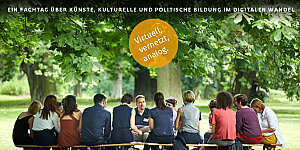
„Virtuell, vernetzt, analog.“ Beiträge und Ausblicke zum Fachtag über Künste, kulturelle und politische Bildung im digitalen Wandel Mai 2020 Die digitale Veröffentlichung „Virtuell, vernetzt, analog.“ präsentiert Beiträge und Ausblicke zum Fachtag über Künste, kulturelle und politische Bildung im digitalen Wandel (Juni 2019) im Schloss und Park der Stiftung Genshagen. Ziel der Veranstaltung war es, einen Raum für interdisziplinären Austausch zu Auswirkungen, Gestaltungsmöglichkeiten, Tendenzen und Konsequenzen des digitalen Wandels zu bieten und Akteurinnen und Akteure aus Kultur, Bildung und Gesellschaft zu vernetzen.
Acting European N°1 Same but different? Lessons for Covid-19 from a decade of EU crisis management April 2020 Beyond its immediate effects as a global health crisis, the Covid-19 pandemic poses manifold political and economic challenges for the EU and its member states. Previous crises have shown that the EU's crisis management is dominated by intergovernmentalism and often limited to damage control. Nevertheless, common institutions and procedures such as those of the eurozone offer clear added value for the limited capacities of each member state and will make a difference in the long run.
Dokumentation des VIII. Genshagener Forums „Digital 'Made in Europe' - Jetzt oder nie?“ April 2020 Die Dokumentation des VIII. Genshagener Forums, das am 13. und 14. Juni 2019 rund 100 französische und deutsche Expertinnen und Experten zum Thema „Digital 'Made in Europe' - Jetzt oder nie?“ zusammengebracht hat, enthält Vorschläge für öffentliche und private Akteure zu drei Hauptthemen: die Frage der Regulierung als Schlüssel einer europäischen Digitalstrategie, die Zukunft von Arbeitsprozessen und Wertschöpfungsketten sowie das Humankapital in Zeiten der Künstlichen Intelligenz.